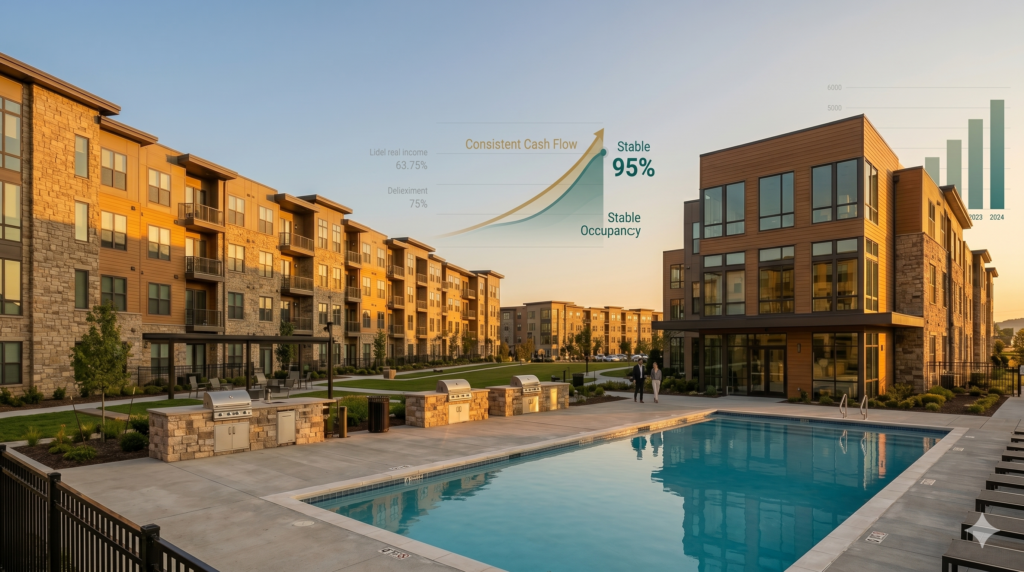
Evaluating Stability Versus Speculation
One of the most common mistakes newer investors make is focusing exclusively on projected returns without evaluating the stability behind those projections. High return targets can appear attractive on paper, but sustainable performance often matters more than aggressive assumptions.
In multifamily real estate investing, cash flow stability plays a significant role in protecting investor capital over time. Stable cash flow allows operators to maintain property operations, weather market fluctuations, and continue executing business plans even during periods of economic uncertainty.
This becomes especially important during changing interest rate environments or periods of slower economic growth. Properties with consistent occupancy, affordable rent positioning, and disciplined expense management tend to perform more predictably than assets relying heavily on rapid appreciation or aggressive rent increases.
For passive investors, understanding the source of projected returns is critical. A deal projecting exceptionally high returns may depend on assumptions that leave little room for error. Conservative underwriting, on the other hand, typically prioritizes realistic rent growth, manageable leverage, and durable market demand.
Cash flow stability is also closely tied to tenant quality and resident retention. Properties serving broad workforce housing demand often experience more resilient occupancy because housing remains a necessity regardless of broader economic conditions. While luxury assets may generate strong returns during favorable cycles, they can also be more sensitive to shifts in affordability and consumer spending.
Another important consideration is debt structure. Properties carrying excessive floating rate debt or short-term financing exposure may face additional pressure when interest rates rise. Stable cash flow combined with conservative financing can help operators navigate uncertainty more effectively.
This does not mean investors should avoid growth opportunities altogether. Rather, it means evaluating whether projected upside is supported by strong fundamentals or driven primarily by optimistic assumptions. Long-term wealth creation is often built through consistency and durability rather than short-term speculation.
For passive investors, evaluating the quality and stability of projected cash flow can provide a clearer picture of risk than headline return metrics alone. Understanding how an asset performs under multiple economic scenarios is often more valuable than focusing solely on best-case outcomes.
At Grovia Capital, we believe informed investors make better long term decisions. If you want to continue learning about passive real estate investing, explore our educational resources or schedule a conversation with our team.
This content is for educational purposes only and should not be considered investment, legal, or tax advice. Every investor’s situation is unique and investors should consult their own advisors.